Christian J Ehrlich
October 2023.
Abstract
This paper addresses the relationship between peace and security in the post-Cold War era. In doing so, both concepts are analyzed through the prism of realism and liberalism, the two most important theoretical foundations of world politics, at least from a Western perspective. Peace Studies and Critical Peace Studies are also considered within the broader analysis of war and conflict.
The above-mentioned schools of thought offer different perspectives on how peace and security are understood, the way in which they impact international politics and how they intend to explain the conflicts of our time. Finally, the author analyses how peace, security -as well as warfare- are understood beyond traditional Western approaches.
Since the world has changed a lot after the Cold War, our understanding of peace and security should evolve as well. For instance, a brief analysis of various Chinese strategic thinkers such as Xuetong, Liang and Xiangsui is introduced in order to offer a more comprehensive vision of such concepts.
The reader should be warned that not a single theory can fully explain the world’s current security challenges, but that a holistic approach is better suited for that matter.
Introduction: peace and security and their relation to war
Talking about peace and security might look easy, but it’s quite the opposite. Although both concepts are part of our everyday life, there is not a unified definition of either. The reason behind this conceptual “blurriness” lays in the fact that peace and security vary upon who’s perspective is being analyzed. If one takes the State as the main target of analysis, security should be thought in terms of the survival of that very State.
The same happens to the concept of peace. From a State-centric approach, it might be understood as the absence of war. Yet a totally different view comes about if one puts the person, as opposed to the State, at the center for the discussion. In this regard, the human-centered approach to security, or “human security” as will be covered in the first chapter, considers a diverse set of variables that impact the person’s security: access to education, development opportunities or health considerations, for instance.
From this human-centered perspective, peace becomes something broader and more complex than merely the absence of war. It goes beyond the lack of physical harm for it considers psychological aspects and subjective perceptions as well. For there may be a State without an open war, yet its citizens might well be afraid of losing their freedom or suffering from the absence of a minimal level of harmony.
Hence peace and security should be understood as evolving, adapting concepts that also impact our very idea of war. If, for instance, one considers security from a State-centric point of view, then war presents itself as a practical tool to advance a state’s policy.
In the words of the renowned Prussian thinker Clausewitz (1840), “war is the continuation of policy by other means” and, since policy is an exclusive activity of Nation-States, war can’t be explained outside the philosophical and practical foundations of the State. This view of security and war became dominant in Western societies since at least the 17th. Century, as a direct consequence of the 30 Year War that brought about the Treaty of Westphalia (Haas. 2020: 3)
Kaldor (2012: 17) emphasizes that the Napoleonic Wars of the beginning of the 18th. Century consolidated the State-Centric idea of war and, although she doesn’t explicitly say so, the concept of security was firmly tied to the survival of the state. The invention of the modern state not only helped frame war as a purely official activity, but also defined what kind of violence should be considered as illegitimate violence. According to Van Creveld:
“To distinguish war from mere crime, it was defined as something waged by sovereign states and by them alone. Soldiers were defined as personnel licensed to engage in armed violence on behalf of the state […] The civilian population was supposed to be left alone…”. (Van Creveld. 1991: 41)
In this regard, as the world moved on to the 20th. Century, several treaties and conventions took place in order to institutionalize war, clarifying its limits and justifications. Somehow, a security-war dialectic was established: whilst State-centric authority codified war as a purely State sanctioned activity, war became the quintessential feature of the survival of the State, leaving the populace off the discussion.
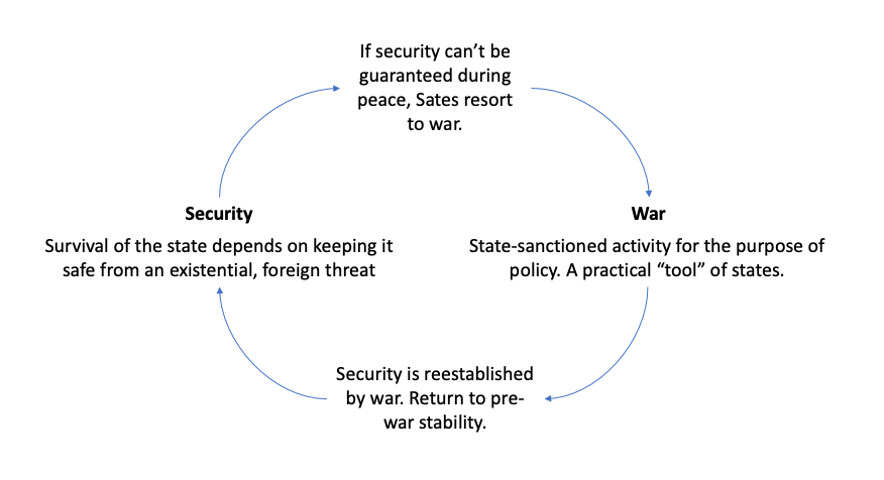
Figure 1. The security-war dialectic. Source: own.
Yet, as interstate wars became less apparent in the second half of the 20th. Century, the very concepts of security, war and peace had to be revisited.
The end of the Cold War period further amplified the need of a more comprehensive view of what constitutes security, raising questions such as: what is legitimate violence? can we consider war an activity exclusively waged by governments? If so, how do we label intra-state conflict or crime-related ones? In essence, how the concepts of security and peace define policy responses to effectively tackle the menaces of our time?
For the purpose of answering those questions, one should analyze the various philosophical schools of thought that frame the concepts of peace and security -as well as war.
The main theories that frame security and peace
As mentioned before, the concepts of security and peace adopt a different face depending on what theoretical fabric is used. In this regard, from an international relations perspective, realism and liberalism are the two competing visions that seek to explain how world politics work. Yet there are other analytical lenses that should also be considered, despite having their roots precisely on realist and liberal theories.
Hence peace studies and human security present their own understanding not only on how the international system is arranged, but also on the relationship between the state and the individual. In referring to International Security Studies (ISS), Buzan and Hansen (2009: 10) provide a four-variable approach that helps structure an idea of the main characteristics of the theories mentioned above.
The first variable refers to the main referent object, whether the State or the individual. The second one analyzes whether to focus exclusively on external threats or incorporating internal ones as well. The third variable addresses a key fact: should one think of security purely in militaristic terms or should we expand it beyond? A fourth and last question would be to understand security solely from a negative perspective, “inextricably tied to a dynamic of threats, dangers and urgency” (Buzan, Hansen. 2009: 10-12).
Considering this approach, realism envisions the State as the principal actor in international relations, which are characterized as anarchic in nature. According to Glaser (2013: 14), the concept of anarchism does not necessarily mean that world politics are chaotic, but that there is no international authority capable of forcing States to avoid conflict. Realism also considers that Nation-States are rational actors, in the sense that they seek to maximize power in order to pursue their objectives.
Since realism puts the State at the center of its analysis, it endorses the idea that security is purely a militaristic concept, where conventional military capabilities are compared to other countries’ means.
In this regard, it is no surprise that realism thrived during the Cold War, for it helped explain a bipolar world where two opposing economic and political systems confronted each other (Glaser. 2013: 25). The threat of nuclear war -and its adjacent concept of Mutually Assured Destruction, or MAD- relegated other security conceptions to a second place. Great power politics became the quintessential feature of realists -for both scholars and policy practitioners- yet the complexity of the world’s problems proved that realism may not be the only theory to address them.
Thus migration, poverty, or intra-state war for instance, are clear examples where realism falls short of providing a comprehensive theoretical umbrella.
Taking HIV/AIDS in Africa as a security question, realists “would not agree that this constitutes a security problem, unless military security is at stake” (Elbe, 2003) whereas other theoretical perceptions would definitively consider it as a security problem that should be treated from a health vision as well as a security one (Buzan, Hansen. 2009: 44). It is not to say that realists consider these topics irrelevant, but they tend to put them in a second place after inter-state rivalry or even analyze them because of conventional, state-centric conflict.
This is where other theories, such as liberalism, help analyze the so-called non-traditional security issues with a broader, more comprehensive perspective. For liberals, even though Nation States are the most prominent actors in the international stage, other stakeholders deserve equal analysis. International and multi-national organizations, Non-Government Organizations (NGOs) and domestic actors receive considerable attention as well (Morgan. 2013: 29).
Perhaps the most important feature of liberalism is that it is fundamentally optimistic, for it sees cooperation among nations not only desirable but “plausibly attainable” (Morgan. 2013: 29). Liberals also sustain that democracy creates the conditions for peace and cooperation, elevating the costs of war and creating incentives to address conflicts through non-violent means.
In considering that the world stage goes beyond the sole interests of Nation States, liberals put a great emphasis in individual rights. Hence the pursuit of Human Rights has been part of the liberal agenda, for it underscores the principle of individual self-determination.
“Liberalism adherents, private and governmental, support a broad list of human rights pertaining to economic, medical, political, sexual and other forms of deprivation and discrimination” (Morgan. 2013: 32). Thus far, the very concept of security has a particular meaning to liberals, in the sense that Nation States are not perceived as the depositories but providers of security to their citizens.
Actually, this is the basis of the Human Security thesis, a highly liberal perspective launched in the 1990’s by the United Nations Development Program, “concerned with how people live and breathe in a society, how they exercise their choices [and] how much access they have to market and social opportunities” (UNDP. 1990: 22). In this regard, liberalism provided the theoretical foundations that made possible a broader definition of security, encompassing concerns such as population growth, health access and the environment, as well as intra-state conflicts like terrorism and organized crime violence (Buzan, Hansen. 2009: 203).
This broadened conception of security was also possible thanks to the end of the Cold War, in the sense that liberalism -alongside its various theoretical approaches- focused on “building a new world order”, and such an endeavor was only feasible once the East-West confrontation ceased. It is not to say that liberalism did not exert influence before the fall of the Soviet Union. Actually, one can argue that the impulse of liberalism in the 1990’s owes a lot to what had already been done in the liberal field since at least the 1960s. (Galtung. 1969).
In this regard, current realism can hardly be understood if one disregards the importance of Peace Studies and how it paved the way to a much more comprehensive explanation of security, peace and war.
Peace studies began as a consequence of the proxy wars that took place in the Korean Peninsula and Indo China (especially Vietnam) after the end of the Second World War and expanded to the analysis of North-South confrontation -aside from the realist focus on East-West conflict- considering issues such as poverty alleviation and the effects of economic development in the environment (Rogers. 2013: 55). It is noteworthy so say that concerns over the state of the environment only began to be addressed -at least from an international stance- in the beginning of the 1970s (UN Conference on the Human Environment, 1972).
Another important feature of Peace Studies is the concept of Structural Violence, brought about by Johan Galtung (1969). It meant that peace -and hence the conditions that make it possible- require a deep understanding of social, economic, and political inequalities among societies, for they are the underlying causes of overt, public violence. Peace Studies’ researchers offered a different approach to security and war, for instance putting themselves as a clear contrast to Cold War realism.
Nevertheless, as Buzan and Hansen (2009: 258) point out, even among Peace Researchers there was a division between those advocating for “Positive Peace” and those in favor of “Negative Peace”. Whereas Negative Peace shared some very specific perspectives with realists, such as the interest in military security and arms control, Positive Peace believed in the possibility “to overcoming realist dynamics” (Buzan, Hansen. 2009: 259). Thus far, both Negative Peace and Positive Peace researchers did help broaden the classical perceptions of security and peace, setting the theoretical foundations that permit a more comprehensive view of the conflicts of our time.
In this sense, today’s Peace Studies focus on preventing war, conflict resolution and peace building; and there are well known international academic institutions that continue to foster this liberal perspective, such as the Stockholm International Peace Research Institute (SIPRI) and the Peace Research Institute of Oslo (Rogers. 2013: 59). These institutions conduct peace research that inform public policy in the issues mentioned above, publishing journals and conflict indexes that keep track of intra-state conflicts caused by terrorism, separatist movements, or violence-related human displacement.
Peace Research, Human Security -and liberalism as a whole- have gained increased importance since inter-state wars have become less frequent over the past decades. Just as realism thrived during the Cold War in the face of a hypothetical nuclear catastrophe, liberal theories and approaches are the quintessential feature of today’s international politics.
Yet this does not mean that liberalism doesn’t face criticism or that it lacks theoretical and practical shortcomings as well. Like all theories before it -especially realism- liberalism should evolve and adapt in order to remain relevant, for the security threats are constantly mutating into ever more complex phenomena.
Does realism -as well as the theoretical approaches related to it- respond to current and future security challenges? Are there any other conceptions that may offer a better understanding to intra-state conflict? Is conventional war really a thing of the past, or has it transformed into a different form of warfare?
If realism put the state at the center of its analysis and liberalism considers the individual as the main referent object, is there any other conception that combines both views into a unified yet flexible perspective? To address these and other questions, one should consider how security, peace and war are explained beyond Western liberalism or realism.
Alternative perspectives towards current security challenges
Thus far we have analyzed realism and liberalism as the main schools of thought in international relations, and despite the fact that these perspectives are quite different in nature, both share one key strategic fact: they were born within Western political philosophy.
This is precisely the very first thing that one should consider in questioning whether realism or liberalism help explain our current world or not, for the entire West-based system is experiencing a degree of upheaval. The increasing weight in international affairs of China or Russia, and to a lesser extent Turkey and India, invites us to think how these nations view themselves in regard to world politics and how security, peace and war are understood according to their own philosophical perspectives.
In analyzing China for instance, one may argue that its policies are realist in nature for they openly seek a “national rejuvenation”. Yet from a purely Chinese perspective, the so-called rise of China makes sense not from a Western realist approach but from a moral one (Xuetong. 2019: 3).
In this regard, Xuetong (2019: 19-22) argues that “in the same way a person is considered moral by other people, a credible state is also considered moral by other states”, which gives that country -in this case China- a strategic credibility to establish “international authority”. Hereafter, this conception of political morality as the source of power explains how China views the world and how it perceives security: it can only be assured through an international system where moral states -and not just military powerful ones- exert influence and authority.
Taking the current situation of the Uighur minority as an example, one can understand the difference in Chinese thinking and Western classical approaches. While a realist would see Beijing’s actions from a military, national security perspective, and a liberal would focus on the humanitarian situation as a whole, the Chinese approach sees it as a perfectly moral justification to expand Chinese culture to all its provinces. Hence, what Western powers might perceive as cultural annihilation of minorities by the Chinese leadership, it is simply a matter of cultural morality for Beijing.
This example proves that classical Western philosophy doesn’t fully apply for the understanding of current security and peace challenges. Actually, also the concept of war has a totally different meaning for Chinese philosophical perspectives than what it means for the West.
While both realists and liberals consider war as a violent contest between Nation-Sates for the purpose of policy (Kaldor. 2012: 23-27), Chinese -as well as current Russian thinking (Jonsson. 2019: 12-21)- perceive war as a comprehensive tool that doesn’t need to be violent in nature. Hence a broader understanding of war includes social, cultural, economic and even natural resources warfare (Ling, Xiangsui. 1999: 153-171)
If war is considered as an activity that encompasses various forms of pressure (not all violent indeed), then the West might not understand when it is at war with other countries that have a different meaning of the term, such as the Chinese or the Russians (Kilcullen. 2020: 9-36). Hereafter, if war has a different meaning in Russia or China than what is thought of it in Western classical approaches, then the concept of peace also differs greatly.
For instance, while peace might be seen as the absence of violence -say overt or structural- (Galtung. 1969:167) a Chinese approach would consider it as a balanced situation between a desired state of calm and what is actually attainable.
Final remarks and reflections
Security and peace have been analyzed through the prism of realism and liberalism, and it can be said that both approaches have offered interesting and valuable analytical tools for the understanding of world’s politics.
However, as discussed above, the world has experienced tremendous changes over the past 30 years, as “geo-strategic relations and global geopolitics have been reconfigured” (Rojas. 2020: 3).
This reconfiguration of international politics has also been empowered by the rise of nations such as China or Russia, countries that seek a much active role in the global governance structure.
For this reason, one can argue that just as realism and liberalism reflect the political thinking of a particular time in history, current challenges demand us to broaden our understanding of security and peace, for they don’t mean the same upon the world’s regions.
Perhaps it is time for realism and liberalism to rethink themselves in the light of other political philosophies that may just define this Century’s future.
Maybe it is time to consider other-than Western approaches for instance.
Disclaimer: this paper is based upon my work during my studies at Coventry University, UK. It is intended to contribute to the discussion of international affairs and security.
REFERENCES
Buzan, Barry. Hansen, Lene. (2009). The evolution of international security studies. UK. Cambridge University Press.
Elbe, Stefan. (2003). HIV/AIDS and the changing landscape of war in Africa. International Security, 24:2, 159-177. Accessed JSTOR: December 1, 2020: https://www.jstor.org/stable/3092146?seq=1&cid=pdf- reference#references_tab_contents
Galtung, Johan. (1969) Violence, peace and peace research. Journal of peace research 6. Accessed December 1. 2020: https://www.jstor.org/stable/422690?seq=1&cid=pdf- reference#references_tab_contents
Glaser, Charles L. (1984). Why even good defenses may be bad. International Security, 9:2, 92-123. Accessed JSTOR: December 1: 2020:
https://www.jstor.org/stable/2538669?seq=1&cid=pdf- reference#references_tab_contents
Jonsson, Oscar. (2019). The Russian understanding of war: blurring the lines between war and peace. US: Georgetown University Press.
Kaldor, Mary. (2012). New and old wars: organized violence in a global era. US: Stanford University press.
Liang, Qiao. Xiangsui, Wang. (1999). Unrestricted warfare. Translated from the original People’s Liberation Army Documents. US: EPBM
Morgan, Patrick. Liberalism. Contemporary Security Studies. Collins, Alain. 28-39. UK: Oxford.
Rojas, Francisco. (2020). Introduction: Hazardous and erratic times-greater and deeper conflicts. The Difficult Task of Peace: crisis, fragility and conflict in an uncertain world. 3-º3. Switzerland: Palgrave Macmillan.
Rogers, Paul. (2013). Peace Studies. Contemporary Security Studies. Collins, Alain. 54-64. UK: Oxford.
Van Creveld, Martin. (1991). The transformation of war. New York: The Free Press.
Haass, Richard. (2020). The world: a brief introduction. New York: Penguin Random House.
Waever, Ole. (2004). Peace and security: two evolving concepts and their changing relationship. Guizzini, Stefano. Jung, Dietrich (Eds). Contemporary Security Analysis and Copenhagen Peace Research. London: Routledge. 53-65
Xuetong, Yang (2019). Leadership and the rise of great powers. US: Princeton University Press.

 Defensa - Estrategia - Geopolítica